
Warm Up
A variety of actions might be included in warm-up activities, and there is good reason for keeping these simple and repetitive. If the brain and muscles have to concentrate on learning new and complex patterns of movement, then this takes attention away from raising the core body temperature by 1 or 2 degrees and increasing the heart rate enough to perspire.
Movements might include:
walks gradually increasing in speed to a small run;
shoulder rolls, arm circles and simple stretches of the torso and arms;
gentle flexions (extreme flexions should be avoided in warm-up activities), extensions and rotation of the joints, including knee bends (plié);
movement of the torso in all directions, swings and sitting rolls;
simple continuous patterns of movement to increase the pulse rate and warm the body.
The benefits of an effective warm up are that:
The body will be prepared for movements needing speed, strength and more complex neuromuscular co-ordination.
Oxygen will reach muscles more efficiently and this will aid muscle contraction and relaxation.
The body and mind will be prepared to concentrate.
All of the above help to minimise the risk of injury.
Start with a few basic stretches and then begin with a warm up Bronze Routines
Jumping jacks: Starting with a dynamic exercise— a series of small movements—is the best way to increase your heart rate, blood flow, and prepare your muscles for static stretching. Perform two sets of 20 jumping jacks to kickoff your warm-up routine.
Leg swings: Isolation exercises like leg swings allow you to focus on one body part at a time, isolating the body movement to increase your flexibility and range of motion. To do a leg swing, stand with one leg facing forward, lift the other leg, bend it just a little as you swing it toward the front of the room and then toward the back of the room. Repeat this motion at least 10 times for each leg. If you’re having a hard time staying balanced, hold on to a chair or ballet barre to remain upright.
Lunges: Lunge stretches are a great way to stretch many of the muscles in your lower body, from your quads to your glutes. To do a lunge stretch, stand upright with your feet shoulder-width apart, then slide one foot back behind you so that your front knee is bent (directly above your front foot) and your back leg is as straight as possible. Continue to deepen the stretch, lowering yourself as much as you can—place your palms on the floor for balance, if necessary. Repeat this 10 times on both sides, deepening the stretch each time.
Heel raises: Heel raises combine a hamstring stretch and calf stretch, making you more limber. To do a heel raise, stand with your feet together facing forward, then lift your heels off the ground so that you’re standing just on your toes, then lower yourself back to the starting position. Repeat at least 10 times.
Hip swings: To warm up your hip joints, stand upright with your feet shoulder-width apart, then alternate moving your hips from left to right, repeating at least 10 times per side.
Neck turns: You can pull your neck muscles if they are not adequately warmed up. To do neck isolation exercises, stand upright with your hands on your hips, then look to the right for a beat and the left for a beat. Repeat several times. You can also roll your neck clockwise and counterclockwise to increase the stretch.
Shoulder rolls: Shoulder rolls help lower your risk of neck and back injuries while you dance because they stretch the tendons and muscles in the shoulder area. To do a shoulder roll, stand upright with your head facing forward, lift your shoulders toward the ceiling, and lower them again. Do at least 10 repetitions to get the full stretch.
Breathing exercises: Deep breathing can help improve your blood circulation and lung capacity while also enhancing your muscles’ performance. When you exhale, allow your muscles to relax to dilate your blood vessels and help oxygen reach your muscles. Practice deep breathing during and between stretches for the best results. Learn more essential breathing techniques here.
Choreography: Once you’ve warmed up your body with dynamic movements and static stretches, it can also help to gently perform a few of the moves in the choreography you’ll be working on that day. Replicating these moves will activate the muscles you’ll use during the dance routine, making your warm-up even more effective.
Cool Down
Cooling down is just as important as warm up, and must be done after dancing. It helps to reduce muscle soreness and speeds up the recovery process after the activity.
The best time to gain flexibility is after your body is sufficiently worked out. Using static stretches to help cool your body down after a long dance class helps in increasing flexibility. The stretches should be performed more slowly, and dancers must concentrate on breathing.
Dancing increases hormones adrenaline and endorphins, in circulations which can lead to restlessness and sleep. Stopping the activity suddenly would lead blood to pool within the muscles rather than returning to the brain, causing dizziness. All the dancing will also lead to toxins like lactic acid getting accumulated which is the reason for all the stiffness and soreness as well as gives you cramps and muscle spasms.
Through stretching, you can bring the breathing rate down slowly, and reverse the warm-up process.
Types of stretches
Active
Belonging to the family of moving stretches, e.g. lifting the leg in a controlled kick or grands battements and holding it there. Very difficult to hold for more than a few seconds but nevertheless regarded as a stretch.
Ballistic
A moving stretch that is not really a stretch at all, it is a bouncing action and NOT a good way of stretching. What occurs is that with every bounce there is a pull on the muscle fibres and given the speed of the action, this makes the stretch reflexes cause an involuntary tightening of the muscle fibres and cancels out any possibility of a long term lengthening of the muscles.
This type of stretch if attempted at all must be done when the muscles are very warm.
Dynamic
A moving stretch but a natural stretch, of the type you would do as you wake in the morning, or if you have been sitting in a car for a long period of time. This is also the type of stretch a newly born baby will do constantly in the first few weeks of life. The benefits of this type of stretch should never be under estimated. To gain benefit from this type of stretch it should be performed with so many repetitions without bouncy or jerky actions. Always stop stretching when muscles are tired, because a tired muscle is less elastic and working a tired muscle will make it have a short fibre memory, then it will be harder to stretch the muscle the next time you try.
Isometric
A non-moving stretch that is achieved by resistance and the tensing of the stretched muscle. It is one of the quickest ways to increase flexibility and also helps the muscle to gain strength, e.g. if you are trying to improve kicks by stretching the hamstrings you would lift the leg and hold it yourself or enlist someone else to hold it, you would then push against the held position – in other words;
1. Get into position
2. Tense the stretched muscle for 6 to 12 seconds
3. Relax but keep hold for 12 seconds then repeat the tensing
The stretch works because you are stimulating the reflexes that lengthen, and in doing this you are overcoming the stretch reflex that will cause you to shorten the muscle.
This type of stretch should never be done on children or teenagers with growing bones and muscles, if muscles become overstretched the joints will become de-stabilised. Problems with knees and hips will then occur because the over stretched muscles are not stopping the joint being moved beyond the capabilities of its structure (rather like the problems that occur when there is natural hyperextension). Joint structure varies from individual to individual, therefore, to avoid damage, these stretches should only be tried when the bones and muscles have reached their adult length.
PNF Proprioceptive Neuromuscular Facilitating
This stretch is made to work by encouraging movement in the muscle fibres. It is a moving stretch and is a combination of passive and isometric stretching. Originally this stretch was used to get dancers back into training after an injury.
The difference between this and isometric stretching is that the limb or part of the body is moved after the tensing phrase. The movement occurs at the time that the brain is still focused on the tensing phrase, the muscle does not have time to switch into shortening mode, this therefore gives time for the limb to be moved slightly to achieve greater length in the muscle without the stretch reflexes kicking in and making it hurt. This stretch can again be done alone or with a partner.
1. Get into passive stretch position
2. Tense the muscle for 6 to 12 seconds
3. Relax the muscle for only 2 or 3 seconds
4. Immediately increase the passive stretch, hold for 10 to 15 seconds
5. Relax for 20 seconds
This is not a stretch for small children and it is recommended that it should only be done once in a 36 hour period. What is actually happening is that you are training the stretch receptors to accept greater length.
Stretching is easier after a good warm up, and if done in this order:
1. Upper and lower back
2. Sides
3. Arms then chest
4. Buttocks before groin
5. Calves before hamstrings
6. Shins before quadriceps
When embarking on a programme of stretching it is important to remember that if the move or exercise pulls or hurts the muscle as the movement or exercise is repeated, then this will set in place a short fibre memory within the muscle, and inhibit the action in the future. In other words, the muscle sends the message to the brain that it hurts so the brain responds by sending messages to the muscle to restrict the action.
Posture and problems in dance
Most people have postural problems to some extent. Unfortunately an imbalance of posture may not affect function in an obvious way initially and so go unnoticed. The time comes however when it starts to manifest itself in contorted movements and a distorted posture. Quite often this is brought about by developing a visual image of how a step or line should be achieved but not the correct technique to achieve it. This will establish a faulty muscle pattern that will lead to strain distortion and difficulty in performing the step.
The most important thing to remember is that good postural alignment, centre and inner strength are vital when performing whatever standard we are, and observation of the central point of balance is the only course for a successful performance whatever the subject.
Points worthy of note for good posture:
The importance of the distribution of the weight equally over the feet
Feeling the length of the muscles in the legs and buttocks
Being aware of lifting the abdominals and the diaphragm to allow the lungs to function
Feeling the navel being pressed back towards the spine
Feeling the length of the muscles from waist to neck equally at both the front and the back
Easing the shoulder blades down the spine and outwards away from the spine, not pinched together
Relaxing the shoulders
Feeling the length of the neck and the distance between the ears and the shoulders, not pulling the shoulders down causing tension in the pectorals and strain in the neck
An awareness of moving the head from the base of the cervical spine, not from the atlas joint where the head or skull sits on top of the spine
Eye line and focus
Watch


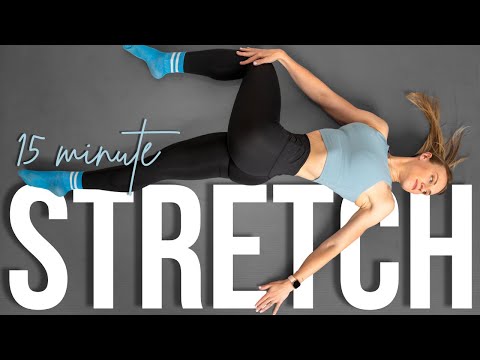
Videos are from YouTube and show the ideas in this chapter. They're not made by StompSpot, so if something differs from the text, go with the text.
Check your understanding
5 questions. Score 80% or more to complete this chapter. You can retake it as often as you like.